Showing posts with label Sagada Attractions. Show all posts

Sagada Rice Terraces

Monday, November 23, 2009

Sagada Rice Terraces Image"They rise up to the heavens... giant steps leading to the sky..."

Legend has it that the Igorot god, Kabunyan/Lumaig used these steps to visit his people on earth. Indeed, the rice terraces carved out of the mountains by Igorot ancestors early in this millennium are simply awesome to behold. Dubbed as the eighth wonder of the world, these rice terraces were built with advance engineering skills and are scientifically, a way of maximizing farm space in the mountainous Cordillera region and environmentally preventing erosion.

Scattered all over the Cordilleras, the most famous of these terraces are found in neighboring Banaue, Ifugao. Sagada has its own terraces - lesser known but equally as spectacular! Whereas the walls of Banaue's terraces are of compacted earth, Sagada's walls are small rocks laboriously piled one on top of the other. One sees the same though... giant steps carved by hand out of whole mountainsides provide for terrific viewing!

SAGADA RICE TERRACES PICTURES:

Sagada Rice Terraces Pictures

Sagada Rice Terraces Pictures

Sagada Rice Terraces Pictures

Read more...

Sagada Hanging Coffins

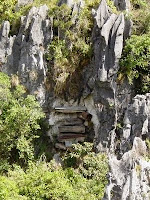
Sagada Hanging Coffin imageOn the way to Ambasing, one of Sagada's 19 barangays, limestone karts cliffs dotted with pine trees dominate the landscape as seen in the this photograph. On these cliffs, perched precariously on a wedge, four or five coffins are arranged in a pile. The oldest one is more than a century old; the latest addition was put into place decades ago. It belonged to a lady from Demang (another Sagada barangay) who happens to be a great-aunt of this webmaster.

In similar places around Sagada including the Echo Valley, one may find these "hanging" coffins. They are usually in groups, some neatly piled, others randomly stacked. All found in places seemingly impossible to reach. Places that can be touched only by mother nature.

These hanging coffins will be there for as long as the elements would allow them. They're precious tokens from a fabled past... adding mystic to an already mystifying place.

SAGADA HANGING COFFINS PICTURES:

Sagada Hanging Coffins picture 1

Hanging Coffins at Sagada's Echo Valley

Sagada Hanging Coffins picture 2

Read more...

Sagada Limestone Caves

Sagada Cave ImageUnderneath Sagada is a network of limestone caves and subterranean streams. These caves were created by water eroding whole limestone mountains over a period spanning thousands of years. Some caves are dry, as if the underground rivers that have created them disappeared. However, these caves are dry simply because the water has found another channel by seeping through the mountain and emptying through numerous small watery caves.

SUMAGING, aptly nicknamed as the Big Cave, was created by water erosion. Guides equipped with lanterns and ropes are necessary companions for exploring this cave as well as other big caves found in Southern Sagada. Visitors never fail to be awed by Sumaging's sheer size, fascinating chambers and rock formations, some of which are dubbed as the "King's Curtain", "Rice Granary", "Cauliflower", "Dancing Hall", etc...; all for their larger than life resemblances of the real things. A part of Sumaging known as "The Tunnel" consists of a series of tiny passages requiring limbo-like movements (read as c-r-a-w-l-i-n-g) to pass through.

During pre-Christian Sagada, these caves served as burial grounds for the locals. With the dead poised in the fetal position encased in a coffin carved out of enormous pine tree trunks, Sagada Igorots of yore may have though these caves to provide the final touch in resembling the environment of a mother's womb... a suitable final resting place.

SAGADA CAVE PICTURES:

Sagada Cave formation

A frog formation inside Sumaging cave.

Sagada Sumaging Cave photo

This formation is called the "pregnant woman" for obvious reasons.

Sagada Sumaging Cave picture

Beautiful shapes and colors deep inside Sumaging cave.

Read more...

Sagada Waterfalls

Sagada Waterfall ImageThere are two prominent waterfalls in Sagada; the smaller but older BOKONG situated in the outskirts of the central barangay of Patay, and the more majestic but younger BOMOD-OK, located in the northern barangay of Bangaan.

Reaching Bomod-ok (locally known as the Big Falls) takes a relatively taxing four-hour effort from town for the hiker but, the scenery is more than worth the effort. At the foot of the Big Falls is a pool of crystal clear water, where a swim is enough to refresh a weary hiker. Intrepid enough visitors may trace where the water comes from starting at the top of the waterfalls and they would be lead by the stream trail to a nice picnic grove.

Equally as exciting is Bokong whose pool at the foot of the waterfalls is deeper though smaller than Bomod-ok's. The pool basin as well as the precipice is carved out of solid rock, the result of the continuous beating by the water for centuries as it persistently pushed its way downstream. Bokong's beauty is complimented by the splendor of the rice terraces looming along the footpath to the waterfalls - a perfect harmony of natural and man-made wonders.

Sagada Waterfalls Pictures:

Sagada Bokong Waterfalls

At the smaller Bokong waterfalls. There's a 20-foot deep circular pool at the bottom of the falls.

Sagada Bomod-ok Waterfalls

Spray at the bottom of the Sagada Bomod-ok waterfall.

Sagada Bomod-ok Waterfalls

A view of the Bomod-ok waterfall from a distance.

Read more...

Sagada Can't Miss Sites - Part 2

Sagada WeavingThis is the second post that continues my list of 9 can’t-miss sites for any Sagada visitor. This list is in just one webpage in the sagada-igorot.com website, but I’m splitting it into 2 blog posts. This second post describes 5 places – a couple of waterfalls, a burial cave, the tallest mountain in Sagada, a lake, and a souvenir shop.


BOKONG & BOMOD-OK Waterfalls

Sagada Underground River

Follow the underground river (in picture) in Latang upstream leading to Bokong waterfall. There are three natural diving spots - the highest of which require for the diver to run and jump far enough over some bushes to be able to reach the pool below. The photo on the left is the underground river going to Bokong. Photo Credit – Tiff, Marge, Happy and Cindy.
Other Can't Miss Waterfalls: Bomod-ok (the Big Falls)

Burial Cave

Sagada Burial Cave

Centuries old coffins stacked against each other and filling the cave up to its ceiling. Some coffins are as short as 3 feet, since pre-Christian Sagada Igorots were curled up into a fetal position before being placed in their coffins. Photo Credit – Mr. Kent Sinkey.

Mount AMPAKAW

Sagada Mt Ampakaw

The tallest mountain in Sagada; this is an ideal picnic place during the months of April and May when the summer sun is pleasant and the blackberries are ripe for picking. Photo Credit – Tiff, Marge, Happy and Cindy.

LAKE DANUM

Sagada Lake Danum

On the outskirts of Sagada, on the road going to the neighboring town of Besao, you can take a glimpse of this dying lake. (Danum in Kankana-ey means "water"). Further down the road, a daughter lake is springing up with fresher and clearer waters (in picture). Photo Credit – Kent Sinkey.

SAGADA WEAVING

Sagada Weaving

Sagada Weaving (in picture) definitely has the best handwoven souvenirs in town! It is one of Sagada's biggest employers and one can visit the weaving looms to view how intricate the weavers go about in producing the handwoven raw materials.

Read more...

Sagada Can't Miss Sites - Part 1

Sagada St. Mary the Virgin ChurchI’m posting my list of 9 can’t-miss sites for any Sagada visitor. This list is in just one webpage in the sagada-igorot.com website, but I’m splitting it into 2 blog posts. It may take around 3-4 days to visit and enjoy these places. I’m listing the first 4 in this post; the list includes an American-established institution, rice paddies carved out of whole mountainsides, an unusual burial place, and a huge limestone cave.


The Mission Compound

Sagada St. Mary the Virgin Church Mission Compound

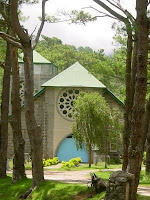
The Mission of St. Mary the Virgin in Sagada was founded in 1904 by American Missionary John Staunton. Visit St. Mary the Virgin Church (in picture), St. Mary's School, the cemetery, Calvary and the alleged bottomless pit of Kingkitongan. At the cemetery, locate the grave of the late historian and adopted Sagada son, Dr. William Henry Scott. Photo Credit – Mr. Kent Sinkey

Kiltepan Rice Terraces

Kiltepan Rice Terraces

The Kiltepan Rice Terraces are arguably the most extensive found in Sagada. It got the name from its three bounding barangays: KILONG, TETEP-AN, and ANTADAO. Other Can't Miss Rice Terraces include the Big Terraces in Banga-an and the Rice Terraces on the way to Sumaging Cave and Bokong. Photo Credit – Hatow's Gallery

ECHO VALLEY Cliffs and Hanging Coffins
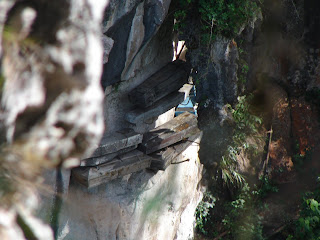
Sagada Echo Valley and Hanging Coffins

The Hanging Coffins found at the ECHO VALLEY takes a little bit of adventurous spirit to be able to reach it. Hidden in the dense foliage of the valley, the hanging coffins are "hanged" from the limestone cliff using slabs driven into the rocks. Other Can't Miss Hanging Coffins include the Hanging Coffins on the Way to Ambasing. Photo Credit – Tiff, Marge, Happy and Cindy

SUMAGING, The Big Cave

Sagada Sumaging Cave

This multi-chambered cave is a must see for visitors and locals alike. One may choose to go down the tunnel (lower chamber) and/or explore the upper chamber where the "Dancing Hall", the "Cauliflower", the "Dap-ay", etc... are found. Be sure to ask your guide to lead you to the "Giant's Foot". Reserve at least a half day for exploring this cave. Photo Credit – Mr. Kent Sinkey

Other Can't Miss Caves: Balangagan, Matangkib, Lumiang. Crystal Cave is closed due to rampant vandalism. There are plenty of other caves in Sagada that are not yet fully explored.

Read more...

Sagada Sumaging Cave has Seashells Imprints

Friday, May 29, 2009

sagada sumaging shell pictureI found this recent, very clear photo of Sagada shell fossils in Sumaging Cave at the TrekNature galleries. I've seen these imprints while I was in the cave more than a decade ago. It's supposed to be proof that Sagada, with its vast network of limestone caves was once underwater many thousands or millions of years ago. I'm not sure if they're fossils though - or they're actual shells. This particular picture is amazing in clarity because the ones pointed to me before were high up in a wall, and with only the Petromax light, I couldn't see the imprints very clearly. Visit this TrekNature gallery for a higher resolution view of the image.

Read more...

Sagada's Wild Horses Online

Monday, May 5, 2008

It's true. Howie Severino's wild horses in Sagada documentary was posted on his blog. The documentary can be viewed in 3 10-minute YouTube clips. Amazing.

Check out the full version of "Saan Sa Sagada?"

Read more...

Wild Horses? In Sagada?

Sunday, May 4, 2008

Photo from Howie Severino's Blog

I lived in Sagada for most of my growing up years and I never heard of such a thing. Then, a friend told me in college about a place in Sagada called Marlboro Country where the wild horses roam. I didn't think much about it until I saw Howie Severino's blog post and how he had made it a personal quest to look for these animals. Too bad I'm not in the Philippines when this documentary was aired on April 28. But I'm glad they were caught on tape, something to refer to in future years to come.

Read more...

Mt. Ampakaw

Wednesday, April 9, 2008

(View from Mt. Ampakaw. Photo courtesy of Tiff & Marge)

It was 20 years ago this month when I visited Mt. Ampakaw. My sister and I were spending some summer days with my maternal grandparents, and our cousins guided us through the hour-long trek up Sagada's highest peak. I remember the breeze and the cow dung. I thought it was strange that there were very few pine trees at the top and mostly shrubs were present. All around us were peaks of other parts of the Cordillera Mountain Range. The oldest cousin in the group scared us by narrating her dad's encounter with a "buso" (a headhunter). I'm sure it wasn't true but it still gave me the creeps.

I remember the ant-like sizes of the people at the town center as they went about their tasks. We had to hurry down in the afternoon as a thunderstorm threatened. I never went back to Mt. Ampakaw afterwards. But a half day visit left enough memories that I can share to my children, who I hope will someday do the trek up the mountain. This time, I will be their guide.

Read more...

Yoghurt House

Monday, March 31, 2008

(Yoghurt House banner)

The YOGHURT house at the boundary of Poblacion and Dagdag is a popular and excellent restaurant. Four of my friends who have travelled worldwide provided these photos and were praises on this restaurant's menu.

When I go home, I always get servings of their yoghurt and mix it with fruit. Very GOOD! Their yoghurt recipe is a product of incorporating critiques from local and foreign visitors through the years.

I heard that they attempted to turn down a visit by President Arroyo when she was in town to check Sumaging cave. Supposed reason: they have guests and she has no room. It came from an eyewitness so I guess it's true. Bottomline: this place is a must-go when in Sagada.

(Inside YOGHURT House)

Read more...

Sagada Weaving

Saturday, March 15, 2008

Sagada Weaving is one of the more popular souvenir shops in Sagada. Some of their products can be viewed at the KM Amore International website. Below is a user's review on the shop.

Source: http://members.virtualtourist.com/m/cbd07/152064/c/

Name of Shop: Sagada Weaving

If there's one thing you should consider buying as pasalubong from Sagada, it would have to be the items made out of the Sagadan cloth. Bags, puches, clutches, cellphone holders, wallets, etc... as long as they're made of the colorful cloth which Sagadan weavers make inside their shops (for some).

The Sagada Weaving shop have the best looking products of all but of course, their items are more expensive compared to other stores. I really like their huge sling bag but it's way out of my budget. The little pouches are also cute so you better buy one or two. You can also observe the Sagadans who are weaving / sewing the items just behind the counters.

Aside from this specialty shop. there are lots of souvenir shops scattered all over the place. You can get cheaper items from them and you can still haggle for the price especially if you're buying lots of items.

What To Buy: Items made of Sagadan cloth whoch cost PhP25.00 (bracelets, necklaces, chokers) - PhP900.00 (for big bags)...

The t-shirts sold in Sagada Weaving are also the best looking of them all. The rints are nice and it's not that colorful (they come in black or white or earth colors... which is good coz it makes the shirts look more modern and funky). Price ranges from PhP250.00 - PhP350.00 depending on the sizes and styles.

What To Pay: PhP25.00 to PhP50.00 for the bracelets, necklaces and chokers.
PhP300.00 - PhP1000+ for the bags of several sizes and styles.
PhP50.00 - PhP500.00 for smaller bags, pouches, cases, etc.
PhP250.00 - PhP300.00 for t-shirts

Read more...

Saturday BUFFET at the Log Cabin

Sunday, February 10, 2008

When in Sagada, I normally eat at home. But I tried the LOG CABIN once and it's been unforgettable. I regret not having more chances to eat there... Oh well, there will be more times to do so in the future.

It doesn't have a large seating capacity so check several hours before you plan to dine. Bon Appetit!


Read more...

St. Mary the Virgin Church

Saturday, February 2, 2008

I was baptized at St. Mary the Virgin Church right smack at the center of the Mission Compound. I attended choir practice here, and Sunday school and mass as well.

Predominantly Anglican Sagada and the neighboring town of Besao were visited by American missionaries in the early 20th century. My grandparents on both sides were Anglican as well.

On a visit to England several years back, I mentioned to an elderly couple how our town was 90% or more Anglican. They expressed amazement. Apparently England, where the Anglican movement began, may not have a town that is as exclusively Anglican as Sagada.

(Thanks to Marge A. for the pictures.)


Read more...